One of the toughest challenges an entrepreneur faces is deciding how many irons to have in the fire. Are you offering too much? Or are you offering too little? Common characteristics that entrepreneurs share include drive, ingenuity, creativity, and a healthy disregard for the status quo. With all this firepower, it’s not uncommon to face the dilemma of where to focus your energy.
As someone who has been there and done that several times and is currently facedown in the same decision-making process, I have some wisdom I care to impart based on my personal and professional growth findings.

Think ‘Matter over Mind’
The Evolution of Man
While your mind races with incredible ideas and you know you have the willpower to accomplish your goals, take a step back and consider what your body can realistically handle. Stamina doesn’t come from the mind—it comes from the energy your body provides to turn visions into reality. The body has been around much longer than the mind. Ultimately, evolution decides—based on what it evolves—what you can and cannot do.
According to Antonio Deamsio, a renowned neuroscientist, Human bodies—meaning multicellular, specialized, and highly organized organisms—existed for hundreds of millions of years before the emergence of the complex brains capable of conscious thought, introspection, and reasoning. In evolutionary terms, basic bodily functions (like metabolism, movement, and reproduction) are ancient, while the neocortex—the seat of higher cognitive functions in humans—is relatively recent.
With this in mind, the first thing to consider when deciding how many or what kinds of products and services to offer is what your body can handle—with or without the employees or resources needed for consistent, successful revenue. At the end of the day, your infrastructure, labor, and the reliability of both are the most significant contributors to success. Ask yourself: if labor didn’t exist, could your body sustain the workload on its own?

Planting Many Seeds Over Nurturing One
Lessons from Agriculture
Many entrepreneurs are filled with boundless ideas. By nature, they are curious dreamers and creative thinkers. As a result, many find themselves somewhere on the ADHD spectrum. This isn’t a bad thing—it’s simply something that requires balance and intentional management.
A 2018 study published in Small Business Economics found that entrepreneurs reported significantly higher levels of ADHD symptoms compared to managers and non-entrepreneurs. The study suggests that traits such as impulsivity and hyperfocus may contribute to entrepreneurial success but also require self-awareness and coping strategies.
“ADHD symptoms, such as impulsivity and sensation-seeking, can provide advantages in entrepreneurship by fostering innovation and risk-taking, but they also necessitate effective self-management.”
Additionally, Harvard Business Review published an article highlighting that many successful entrepreneurs openly discuss their experiences with ADHD and how they leverage their unique thinking patterns to fuel creativity and drive, while also recognizing the importance of balance and management.
Keeping this in mind, ask yourself: What does a seasoned farmer or gardener do? Do they plant millions of different kinds of seeds and hope for the best, or do they first understand what one seed requires to thrive and then nurture that seed with consistent water and sunlight? Do they operate from a scarcity mindset—driven by fear—believing that focusing on one seed will limit their harvest? Through trial and error, seasoned farmers and gardeners would answer with a resounding no.
In The New Organic Grower, renowned farmer Eliot Coleman explains: “Success in farming comes from knowing your crops’ requirements and providing for them consistently, rather than simply increasing the number or variety of seeds you plant. Attention to detail and care for each crop is what yields abundance.”*
This perspective is echoed in productivity and business literature. Greg McKeown, in his best-selling book Essentialism, draws similar parallels: “Like a farmer who invests in the right seed and cultivates it carefully, we achieve more by focusing our energy on the most important projects and giving them the attention they need to flourish, rather than spreading ourselves too thin.
Greed vs. Patience
How much is enough?
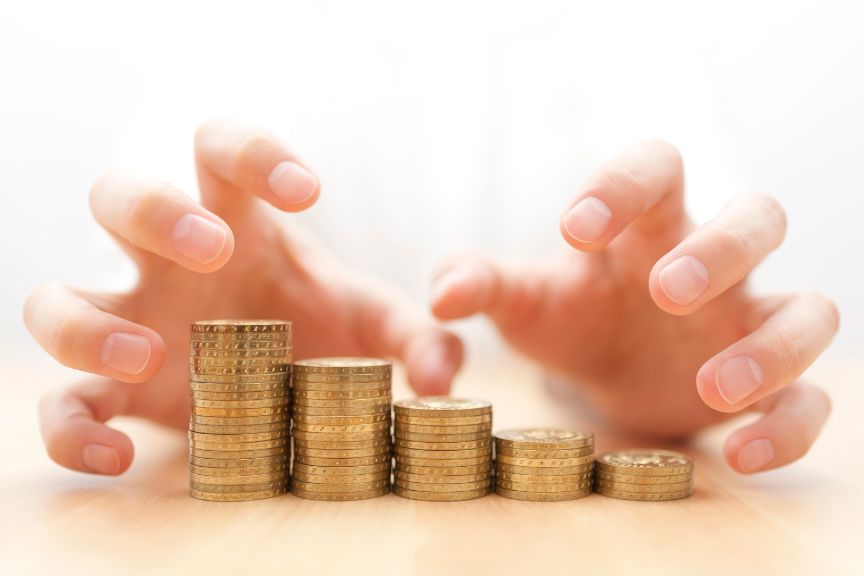
In the entrepreneurial journey, it’s crucial to recognize the difference between greed and patience. Greed, fueled by the desire for instant results or unchecked ambition, can lead to reckless decisions and isolation. Patience, on the other hand, opens the door to thoughtful growth, sustainable success, and healthy relationships. While waiting for your efforts to bear fruit, use this time to develop partnerships and invest in relationships with loved ones and friends. This ensures you never have to carry the burdens of business alone.
Whether or not you’re religious, the Bible has key lessons on this. Proverbs 16:32, NIV reminds us, “Better a patient person than a warrior, one with self-control than one who takes a city.” Likewise, the cautionary tale of fallen athlete Lance Armstrong, who became so singularly focused on victory that he cut himself off from meaningful connections and ultimately paid a heavy personal price, serves as a powerful reminder: relentless pursuit at the expense of relationships can lead to emptiness, even in the face of achievement. True entrepreneurial success is not just about what you build, but also about who stands beside you along the way.
So ask yourself, how much is enough? Are you taking time to develop meaningful partnerships that will help lift up your business? Are you taking time out to ensure that your relationships with friends and family are balanced? You can’t run on empty. Which brings us full circle to the attention you pay to what your body vs. your mind can handle. Not only is it imperative to invest in these relationships to maintain physiological and biological balance, but also to spark ideas or different ways of doing things to help you lighten your load. I can’t tell you how many times I’ve shared a simple moment with my son playing pickleball or with my daughter, who was talking to me about a school project, where they both enlightened me to a thought process or solution I could apply to my business strategy.

Conclusion
The Blacksmith’s Brilliance
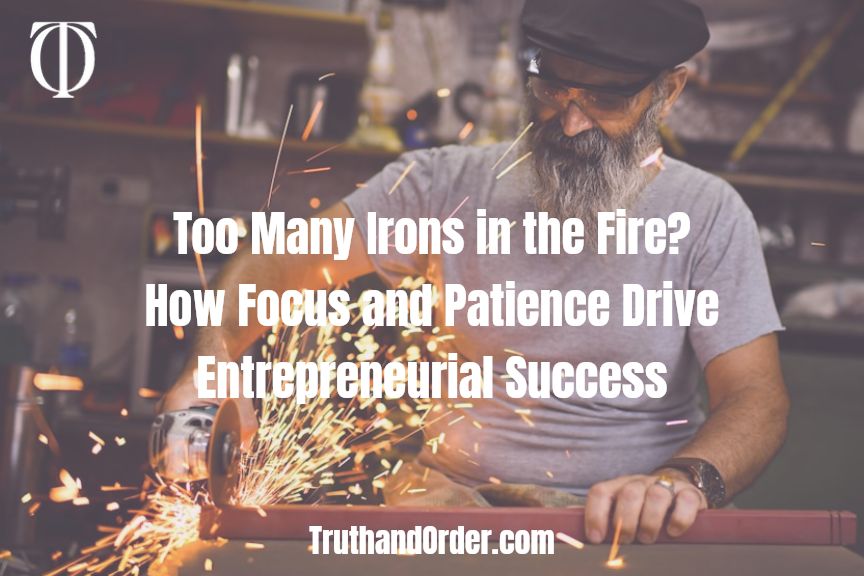
The phrase “too many irons in the fire” comes from the world of blacksmithing, where a smith would literally place irons in the fire to heat them for shaping. Having too many irons in the fire meant none would get the attention or heat needed to be shaped properly. In entrepreneurship, the same holds true: spreading yourself too thin across too many projects means none receive the focused energy required for success. Throughout this article, we’ve explored why it’s crucial to be intentional about how many irons you keep in your fire—and how patience, self-awareness, and strategic focus yield the best results.
Finding the right balance as an entrepreneur is not a one-time achievement, but a continual process of self-reflection and adjustment. True success goes beyond financial metrics or the number of projects you launch. It’s about nurturing the seeds of your business with intention, leveraging patience over greed, and investing in the relationships that fuel your creativity and resilience. Remember, your greatest breakthroughs often come when you are aligned in mind, body, and spirit—and when you allow trusted partners and loved ones to help carry the load. Sustainable entrepreneurial growth is built on focus, self-awareness, and genuine connection. The journey is richer and more rewarding when you don’t walk it alone.
Key Takeaways
– Balance is the foundation of lasting entrepreneurial success.
– Listen to your body’s limits, not just your mind’s ambitions.
– Focus on nurturing one idea or project at a time for maximum impact.
– Patience paves the way for sustainable growth and creative solutions.
– Invest in partnerships and relationships—they lighten your load and spark new ideas.
– True abundance comes from quality, not quantity, both in business and in life.
In all aspects of your entrepreneurial endeavors, remember to maintain and achieve balance, mind, body, and spirit.
–Consult Your Body
–Nurture One Seed At A Time
-Patience Equals Solutions
References:
Damasio, A. R. (1994). Descartes’ Error: Emotion, Reason, and the Human Brain. G.P. Putnamy ’s Sons.
Lerner, D. A., Verheul, I., & Thurik, R. (2019). Entrepreneurship and attention deficit/hyperactivity disorder: A large-scale study involving the Dutch population. Small Business Economics, 53(2), 381-393.
*Coleman, E. (1995). The New Organic Grower: A Master’s Manual of Tools and Techniques for the Home and Market Gardener. Chelsea Green Publishing.
**McKeown, G. (2014). Essentialism: The Disciplined Pursuit of Less. Crown Business.
Armstrong, L., & Jenkins, S. (2015). Cycle of Lies: The Fall of Lance Armstrong. Dutton.
Macur, J. (2014). Cycle of Lies: The Fall of Lance Armstrong. HarperCollins.