

We tend to look at greed as a moral flaw. A simple character defect. We label those who constantly amass wealth, power, or status as selfish and insatiable, assuming their hunger is a natural, albeit ugly, part of their personality.
But what if greed isn’t the primary wound? What if it’s the bandage?
If we peel back the layers of excessive accumulation, we often find a hidden scar. A surprising new argument suggests that modern greed is often a defensive shield built to protect a person from the sting of persistent criticism and judgment. To understand greed fully, we must first understand the psychological impact of feeling “not enough.”
The “Void” Created by Criticism
Greed is distinguished by its lack of a “stop” mechanism. It is an excessive desire to possess more than one needs or deserves, particularly material wealth or status. Described as a “bottomless pit,” the act of acquiring does not result in lasting satisfaction. The reason for this insatiability is that it is trying to solve an internal problem with an external solution.
In contrast, criticism—specifically, destructive, judgmental criticism—is an act that expresses disapproval of someone’s faults or mistakes. It targets the person rather than the performance. Research has shown that social judgment and rejection can trigger the same regions in the brain as physical pain.
Consistently criticized individuals, whether by perfectionist parents or demanding peers, internalize a sense of failure. Criticism tells a person they are fundamentally flawed. To fill this emotional void, they may turn to material accumulation. Greed, therefore, becomes a quest for a psychological buffer, a buffer built of wealth to ensure they become “unassailable.”

Using Wealth as Emotional Armor
When a person grows up with constant scrutiny, they learn that vulnerability is dangerous. In this scenario, greed becomes a survival strategy.
The logic is simple but powerful: If I have the most money, the biggest house, or the highest status, I can protect myself from further judgment. Status becomes a shield. The individual tries to become so powerful and wealthy that no one’s words can hurt them again. The hoarding of resources serves as a suit of armor for a fragile ego.
This need for armor forces a person to look outward for validation, rather than finding it internally. Because they were conditioned to believe their inherent self was insufficient, they pivot to quantifiable metrics. They begin to measure themselves by bank accounts, titles, and possessions. Since this external validation is fleeting, the underlying feeling of being criticized persists, forcing the individual onto a “treadmill” of accumulation where “enough” is always out of reach.
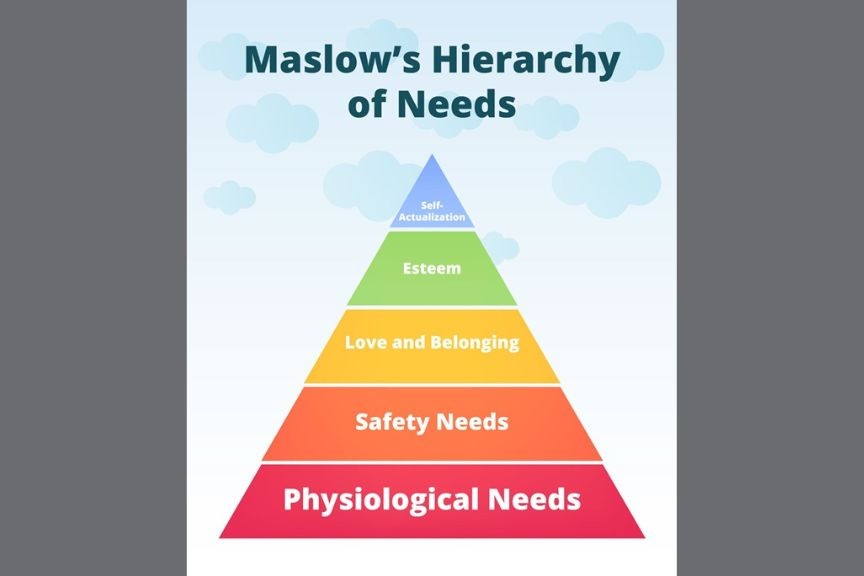
Case Study: A Glimpse into the Compensation Cycle
Consider the character of Julian, who grew up where every accomplishment was scrutinized for improvement.
As an adult in finance, Julian has transformed neutral feedback from colleagues into psychological attacks. During a boardroom debrief, a peer might mention, “The margins are solid, Julian. Next time, let’s look at the long-term sustainability rather than just the immediate acquisition.”
To a healthy professional, this is objective feedback on strategy. But inside Julian’s mind, the feedback is filtered through his “criticism-to-greed” lens. He doesn’t hear “sustainability.” He hears: “You aren’t as smart as you think you are.”
To heal this sting, Julian decides he doesn’t just need a better strategy—he needs to own his colleague’s department. He needs to become so powerful that the peer becomes his subordinate. He converts his emotional pain into a drive for hostile accumulation, proving that greed is rarely about the objects being acquired; it is about the emotional distance those objects create from the sting of judgment.
Breaking the Nexus: The Power of Self-Awareness
If we accept that greed is often a reaction to judgment, the cure is not simply to criticize the “greedy” for their flaw. The true resolution requires a systemic shift in awareness for both the critic and the criticized.
For the Critic: Awareness involves recognizing that feedback is a high-stakes psychological event. When criticism is delivered without safety, it creates a “threat state” in the receiver. Critics must learn that by offering supportive feedback that aims for growth rather than asserting judgment, they lower the threat level. When they remove the sting, they remove the primary reason the other person feels the need for “armor.”
For the Actor: Awareness is even more critical. Individuals driven by compensatory greed must engage in internal inventory. They need to recognize that their hunger is a hurt. By naming the “inner critic,” they can begin to separate their human worth from their net worth. Once they realize that no wealth can rewrite memories of inadequacy, the compulsion for greed loses its power.

Conclusion
The argument that greed stems from criticism suggests that greed is a mirrored reaction to the environment’s harshness. A culture obsessed with “correcting” and “judging” will inevitably create individuals obsessed with “having” and “hoarding” over making meaningful contributions.
Greed dies when the need for a shield disappears. When we establish an atmosphere defined by mutual support rather than constant judgment, we move from a battle for status to collaborative growth.
References
- Beck, Aaron T. Cognitive Therapy and the Emotional Disorders. International Universities Press, 1975. Buy on Amazon
- Brickman, Philip, and Donald T. Campbell. “Hedonic Relativism and Planning the Good Society.” Adaptation-Level Theory, edited by M. H. Appley, Academic Press, 1971, pp. 287-305. Buy on Amazon
- Eisenberger, Naomi I., Matthew D. Lieberman, and Kipling D. Williams. “Does Rejection Hurt? An fMRI Study of Social Exclusion.” Science, vol. 302, no. 5643, 2003, pp. 290-92. Buy Science Magazine Issues on Amazon
- Goleman, Daniel. Emotional Intelligence: Why It Can Matter More Than IQ. Bantam Books, 1995. Buy on Amazon
- Maslow, Abraham H. Motivation and Personality. Harper & Row, 1954. Buy on Amazon